A local microgrid for electricity, heat and mobility
A local energy system has grown around Apartmenthaus Zum Birnbaum from four buildings, a long-established local heat network and one shared energy centre. Generation, storage and consumption are no longer treated separately, but operated as one connected microgrid.
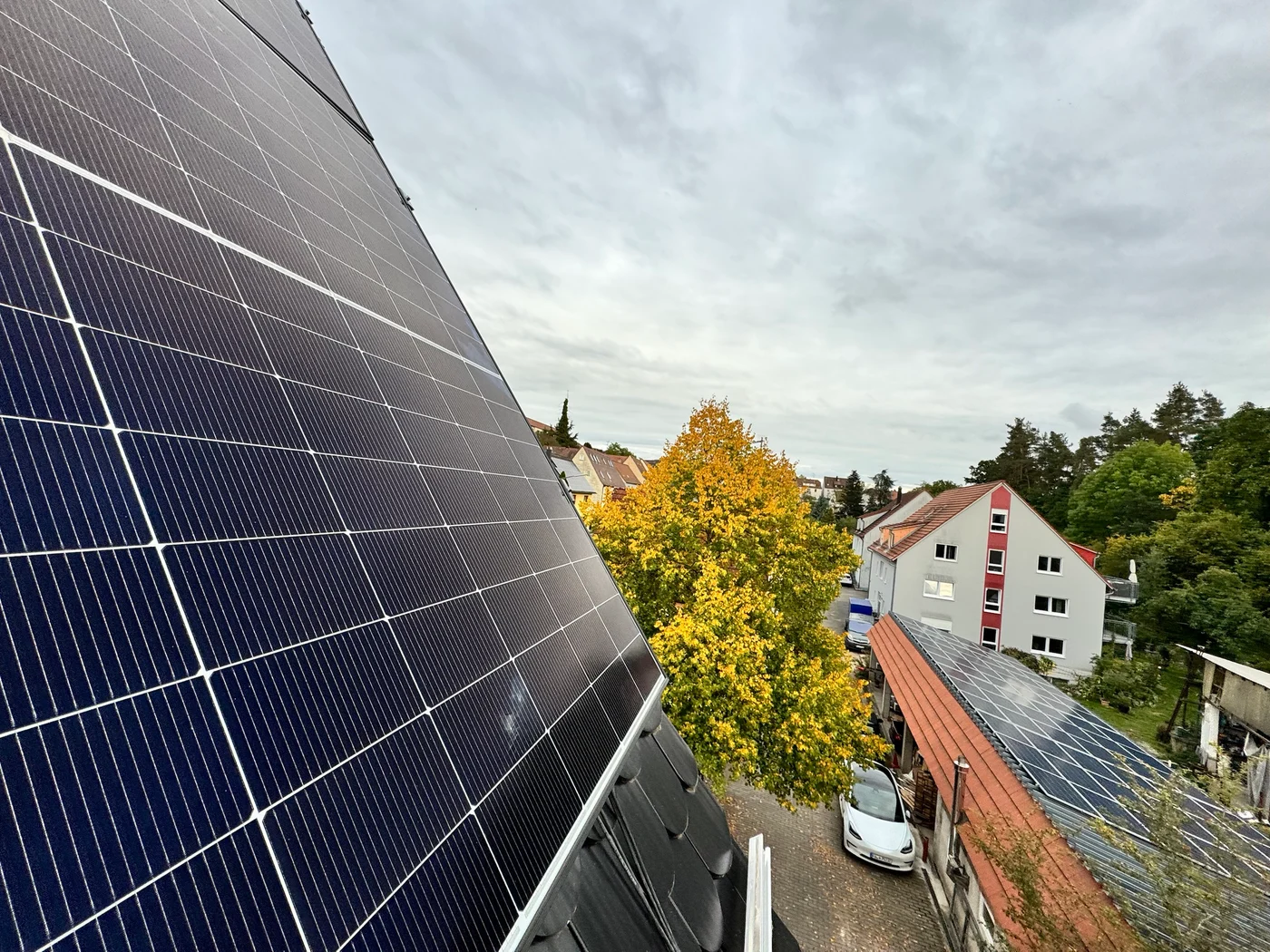
Generate as much energy as possible ourselves and use it locally
The grid-connected system is in regular operation and supplies four buildings jointly with electricity and heat. Photovoltaics, combined heat and power and battery storage work together, while our own metering and control platform makes energy flows visible down to individual systems and photovoltaic strings.
Our microgrid on BR quer
Thursday, 8 October 2026 · 20:15
BR accompanied our energy project, the challenges facing the public grid and our work on an intelligent microgrid.
After broadcast, the report is expected to be available in the ARD Mediathek. We will add the direct link here as soon as it becomes available.
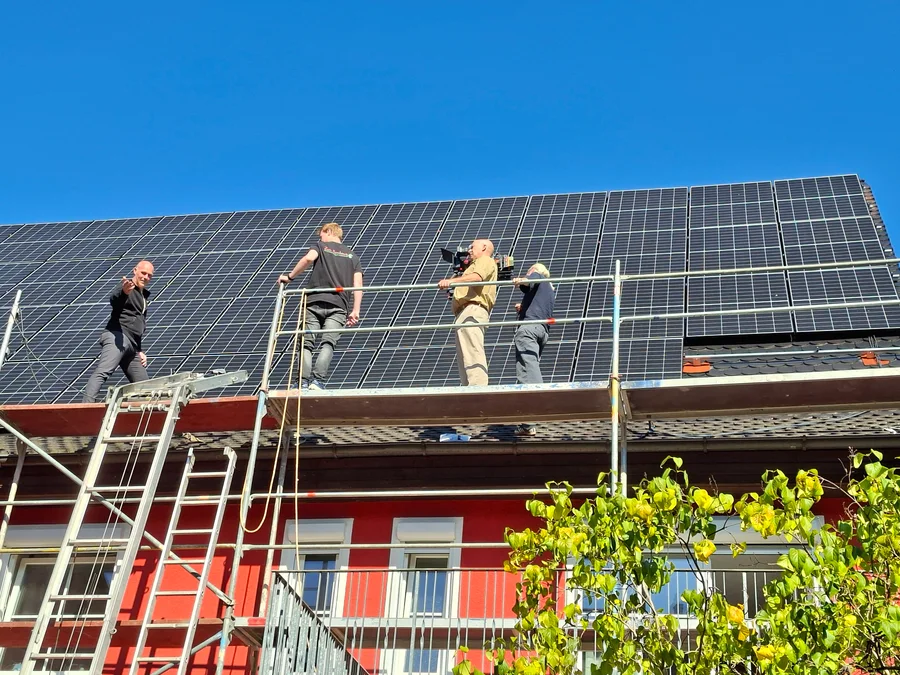
Several buildings, one shared energy system
The network comprises two apartment buildings with six units each, the Zum Birnbaum hotel and serviced-apartment operation, and one detached house. Their shared energy supply has grown through several stages since 2012: first as a heat network and, since summer 2026, as a shared electrical system as well.
What matters is not any single component, but how they work together: photovoltaics provide renewable power during the day, the combined heat and power units generate heat and electricity at the same time, and the battery shifts available energy into hours of higher demand. The four buildings can therefore be managed as one energy site.
Built step by step
Today’s microgrid was not installed as one finished system. Each stage built on the existing infrastructure and on experience gained during day-to-day operation.
The first Dachs unit
The first SenerTec Dachs unit was installed together with the local heat network, beginning the shared supply of several buildings from one energy centre.
Heat network expanded
Two more Dachs CHP units were added, while another building was connected to the shared heat supply.
First photovoltaic array
The first photovoltaic array was installed on the roof of the energy centre, adding renewable electricity to the combined heat and power system.
Battery storage
The 200 kWh battery was added, allowing locally generated electricity to be used more flexibly across the site over time.
Electrical microgrid
The central grid connection and private cables brought the electricity supplies of all four buildings together as one system.
One grid connection point, with our private microgrid behind it
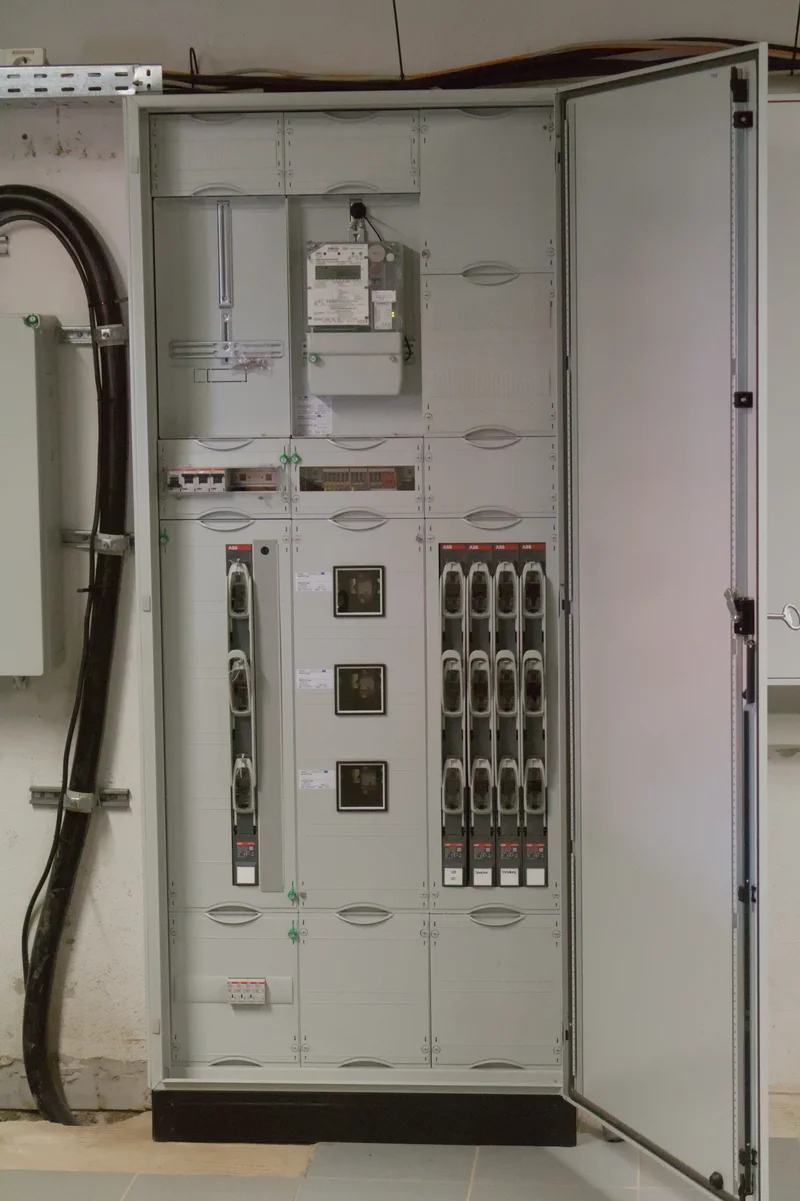
The electrical backbone of the system is the central 400-volt grid connection installed with transformer metering in the energy centre in summer 2026. Our private microgrid begins behind this point, distributing power to all four buildings through our own cables.
To create this system, the former separate grid feeds for the two apartment buildings, the hotel operation and the detached house were disconnected and transferred to outgoing circuits behind the central meter. Since then, the internal distribution and operation of the private cables have been our responsibility.
The site remains coupled to the public grid during regular operation. The transformer meter records 15-minute averages for billing, but that resolution is not sufficient for operating the microgrid. Additional instrumentation therefore captures currents, voltages, power and system states predominantly at one-second intervals.
The microgrid can technically be disconnected from the public grid by hand. In everyday use, however, it operates in parallel with the grid; automatic island operation is not part of normal operation.
Photovoltaics and battery storage
The photovoltaic arrays and battery form the electrical core of the microgrid. Despite being closely coupled, each system remains separately measurable and, where technically supported, controllable down to individual strings.
Three PV arrays
Generation is distributed across the entire site: 20 kWp on the energy centre and carport, 25 kWp on the hotel, and 10 kWp on the residential building. Together, the three arrays provide 55 kWp.
Inverters and strings
Two KSTAR KAC50DP units and one Huawei SUN 17KTL connect a total of ten PV strings. Current, voltage and power are recorded for every string, as are the inverters’ AC values. This makes the yield and condition of each part of the system transparent. The inverters can be limited or disconnected, and the shutdown equipment required by the grid operator is installed.
Hybrid battery storage
The KSTAR KAC100DP2 provides 200 kWh of usable capacity using lithium iron phosphate cells. The 20 kWp array on the energy centre is connected on the DC side and can charge the battery directly without first converting its output to AC. At the same time, the system is coupled to the whole microgrid on the AC side. Its operating state-of-charge range is 10 to 100 per cent.
Operating limit and reserve
The battery can technically charge and discharge at up to 50 kW. In current operation it is software-limited to 40 kW, retaining sufficient reserve at the grid connection. A manually initiated black-start function is available, but has never been tested in practice and is intended solely as an emergency measure during an extended power cut.
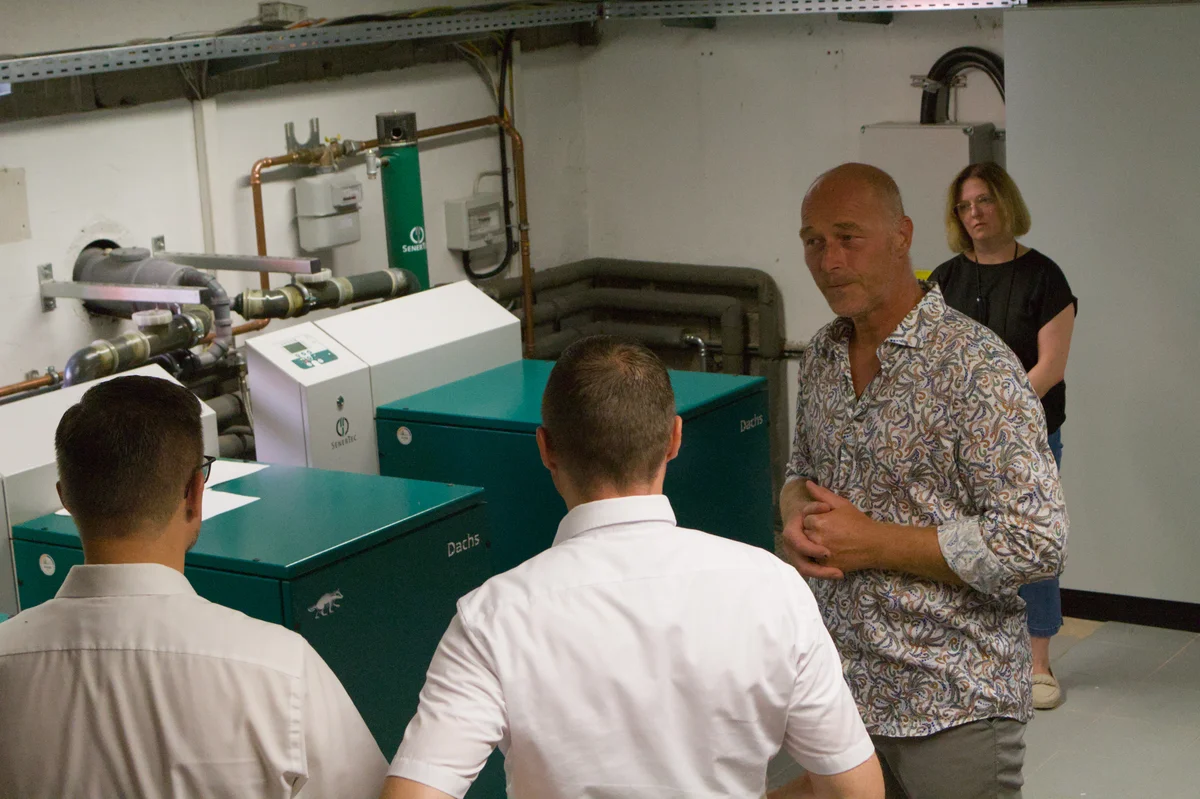
Heat-led, cascaded and connected across 180 metres
Electricity and heat are closely linked within the microgrid. Three natural-gas SenerTec Dachs CHP units operate in the energy centre, including one second-generation unit. Each produces around 5.5 kW of electrical and 15 kW of thermal output: the heat supplies the local network while the electricity generated at the same time flows directly into the microgrid.
The energy centre and every building have their own thermal buffer. When one of these stores cools, the corresponding building signals demand. The three Dachs units are then brought online in cascade according to the number and scale of active requests.
In this way, the approximately 180-metre heat network supplies each building according to demand. The CHP units are currently controlled entirely by heat demand, while the heating circuit remains a separate control system.
Metering, billing and charging infrastructure
The shared supply does not end with technical distribution. To allocate and bill internally supplied power correctly, every tenant has a certified meter. These meters are currently still read and billed manually.
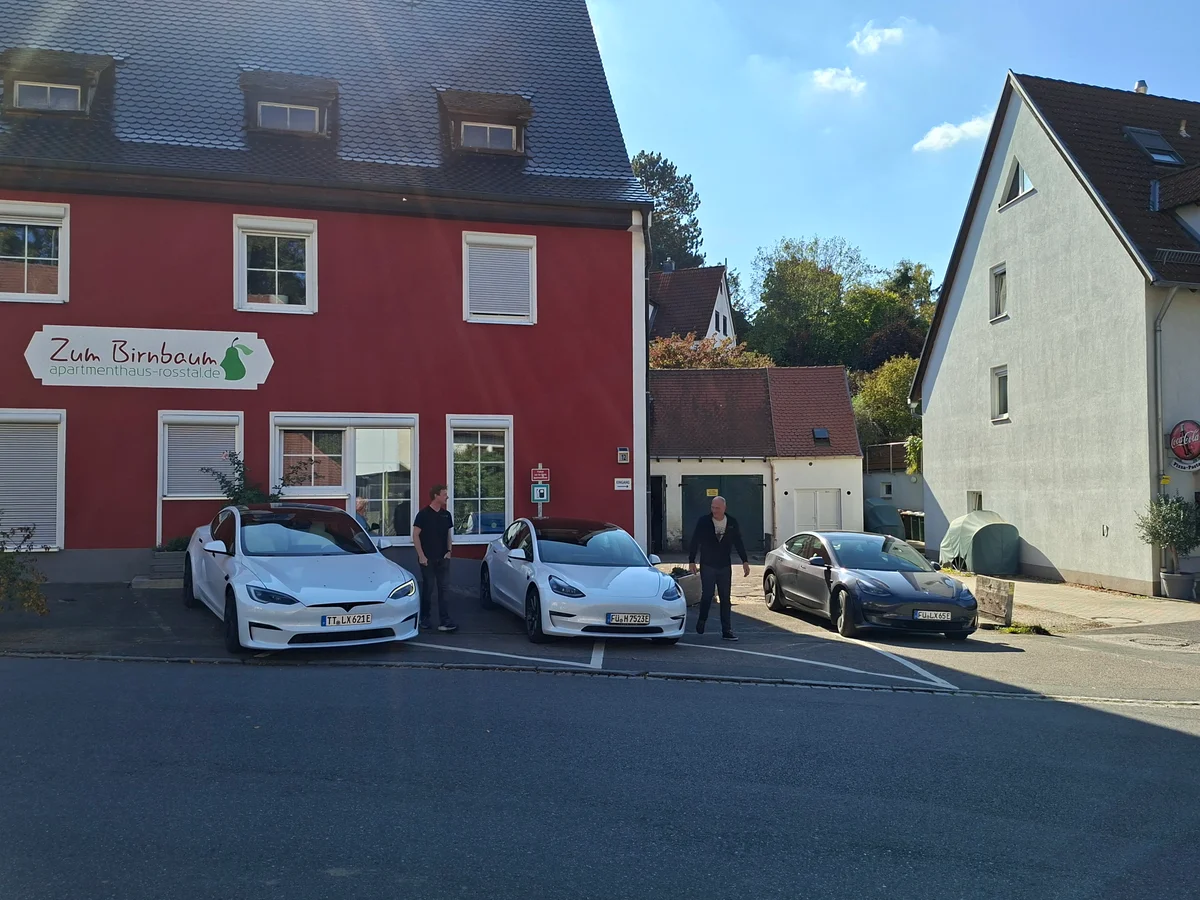
Electric mobility is already part of the system as well. The public 11 kW Type 2 charging point has been in operation since 2016 and is currently enabled and billed manually for guests.
Additional charging points and submeters for larger loads are planned as a later extension. Controllable charging power, OCPP and public roaming are intended to be added at that stage.
Local flexibility in real operation
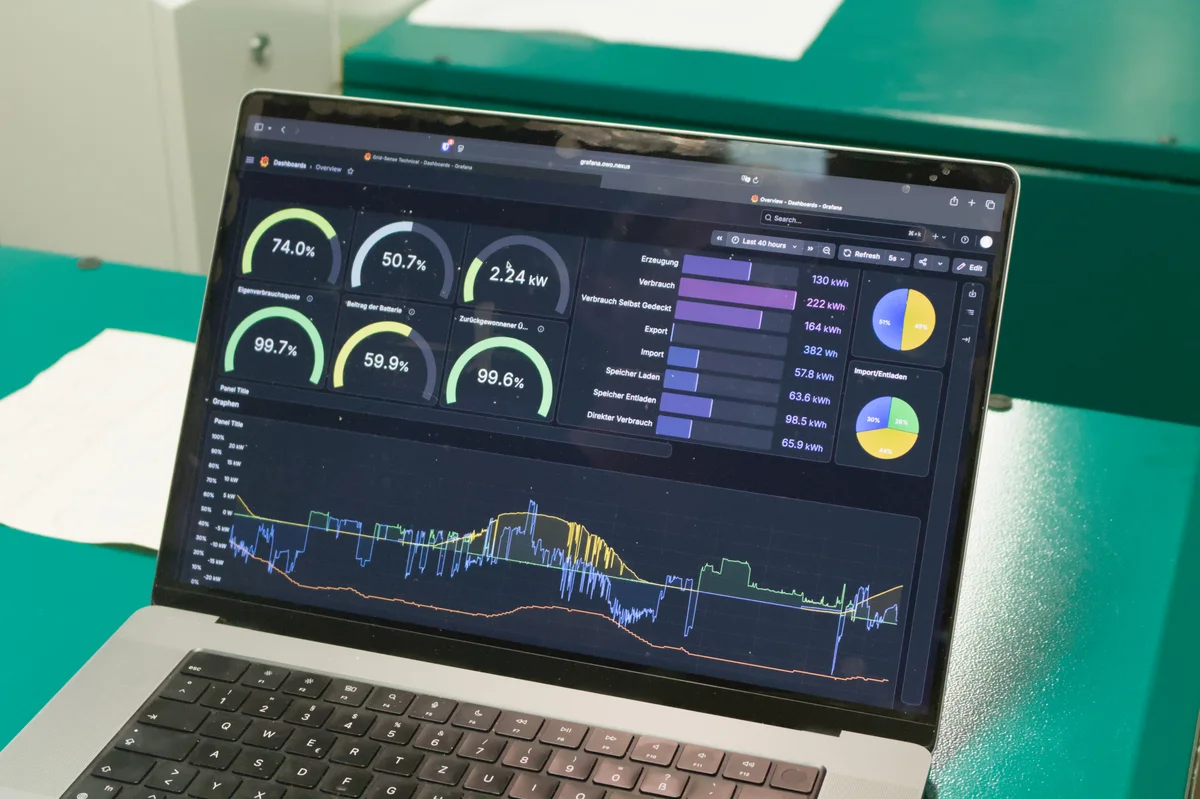
The practical value of the microgrid is most visible in the timing. Photovoltaics generate during the day, while demand is typically highest in the evening. The battery carries energy forward from productive hours, CHP generation complements the supply while providing heat, and coordinated control keeps peaks and unnecessary grid imports low.
The first approximately 60 evaluated operating days already show the effect of this approach. Of 6.68 MWh consumed across the site, 5.15 MWh was supplied from within the microgrid – around 77 per cent. Average grid import was only about 2.1 kW, and the highest load recorded at the grid connection so far was around 30 kW.
These figures should deliberately be read as a snapshot. A further 35 kWp of photovoltaics was added during the period, and the site has not yet completed a full annual cycle in its present configuration. Reliable figures for annual generation, self-consumption and autonomy will therefore emerge only after a complete year of operation.
Managing data, electricity prices and equipment together
For many individual components to become a genuine microgrid, their data has to meet in one place. GridSense provides this foundation: all electrical systems are connected, their measurements are collected centrally, and the entire network can be monitored remotely.
This common view brings technical and commercial decisions together. Electricity generated on site is supplied to tenants and the hotel operation at a substantially lower price than externally sourced power and billed internally. Alongside generation and consumption, grid purchasing costs, internal revenue and margins can therefore be understood in context.
Demand that cannot be covered locally is supplied through a dynamic tariff based on the EPEX day-ahead market. Prices are fixed in 15-minute intervals around 12 to 24 hours in advance, with grid charges and other components added. The battery can therefore respond not only to current power flows, but also charge deliberately when grid power is inexpensive or the market price is negative.
This requires a detailed view of the site. Most components provide new readings every 0.5 to 1 second, with only a few updating every 1 to 2 seconds. Each photovoltaic array, every string and each Dachs CHP unit is measured separately. Historical data is retained long term, allowing individual measurements to form an increasingly reliable picture of the site over time.
Weather and solar-irradiance data add a forecast of expected photovoltaic output. Monitoring, data acquisition and active control of electrical components are already operational. Automated optimisation based on that foundation is currently being tested and expanded step by step, while the heating-circuit controller remains separate.
AHR Energy Day: see the technology and exchange experience
At Energy Day, we open the plant room, explain the system from a practical perspective and talk with individuals, municipalities, policymakers and technical experts.
More about Energy Day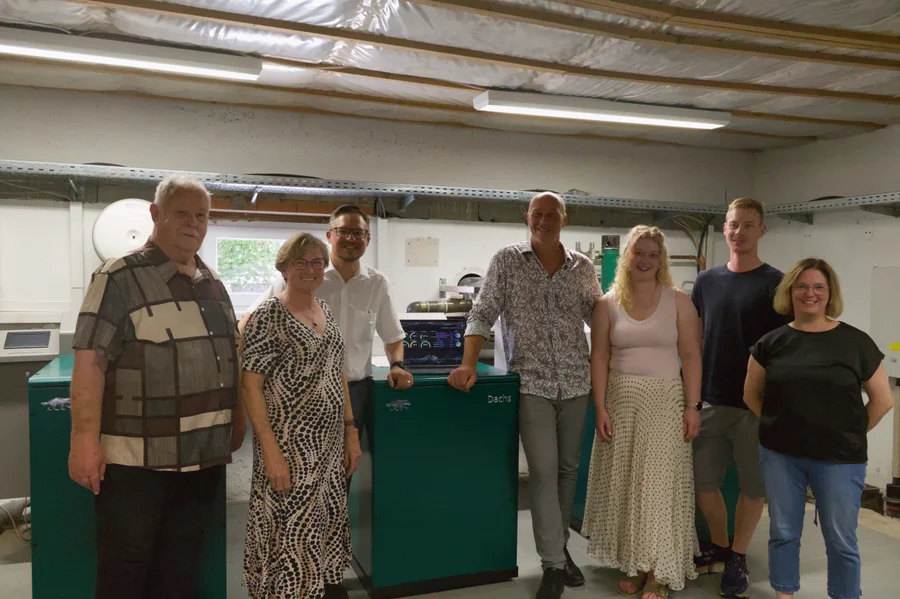
Further questions or interested in the project?
If you would like to learn more about our microgrid, its technology or our experience so far, please feel free to contact us at any time.